
Adventure Dates: 06/02/2026 – 06/07/2026
Introduction
By the time we rolled into Arches National Park, we had already put Bryce Canyon and Zion in the rearview mirror. The bar was high. We came in knowing that Arches would deliver red rock scenery and dramatic stone formations, and it did exactly that. If you have ever visited Red Rocks outside of Las Vegas or Valley of Fire in Nevada, you will recognize the family resemblance immediately. That familiarity kept Arches from feeling like a revelation, but it did nothing to diminish the sheer scale and variety of what the park has to offer.
There was one more factor working against us on this particular afternoon: our daughter had officially hit her limit. After days of hiking, shuttles, overlooks, and canyon walls, she was done. She wanted the hotel, a bed, and a break from the great outdoors. We respected that energy and kept things moving, which actually turned out to be a smart way to experience Arches. We stopped at the visitor center first, picked up some souvenirs, and then drove straight to Devil’s Garden before working our way back south toward the entrance. No forced hikes, no lingering longer than needed. Just the highlights, at a pace that worked for everyone.
Map
The Scenic Drive: Devil’s Garden to the Visitor Center
Our strategy at Arches mirrored what worked well at Bryce Canyon. We drove all the way to the far end of the park first and worked our way back toward the entrance. Starting at Devil’s Garden meant we hit the most remote stop while we still had energy, and the drive back gave us a natural progression through the park’s highlights without backtracking.
The road through Arches is straightforward and well-marked, with clearly signed pullouts at each major stop. Parking was available everywhere we went, which was a welcome change from the frustrations we experienced at Bryce Canyon.
Interesting Points
Arches Visitor Center
We started here before heading into the park proper, and it was a good call. The visitor center gives you a solid orientation to the park layout, the geology behind the formations, and what to expect at each stop. We also grabbed some souvenirs here before hitting the road, which saved us from having to double back later. If you are visiting with kids, this is a great place to let them stretch their legs in the shade before the heat of the afternoon sets in.
Devil’s Garden
The northernmost stop on the scenic drive and the first place we got out of the car. Devil’s Garden is home to the highest concentration of named arches in the park, including the famous Landscape Arch, one of the longest natural arches in the world. The trail here is wide, solid, and more manageable than you might expect. We even spotted someone pushing a wheelchair along the path without much difficulty, which speaks to how accessible the terrain is compared to some of the other trails in the park. Because it was so hot out, we only went for a quick hike and then back to the car.
Skyline Arch
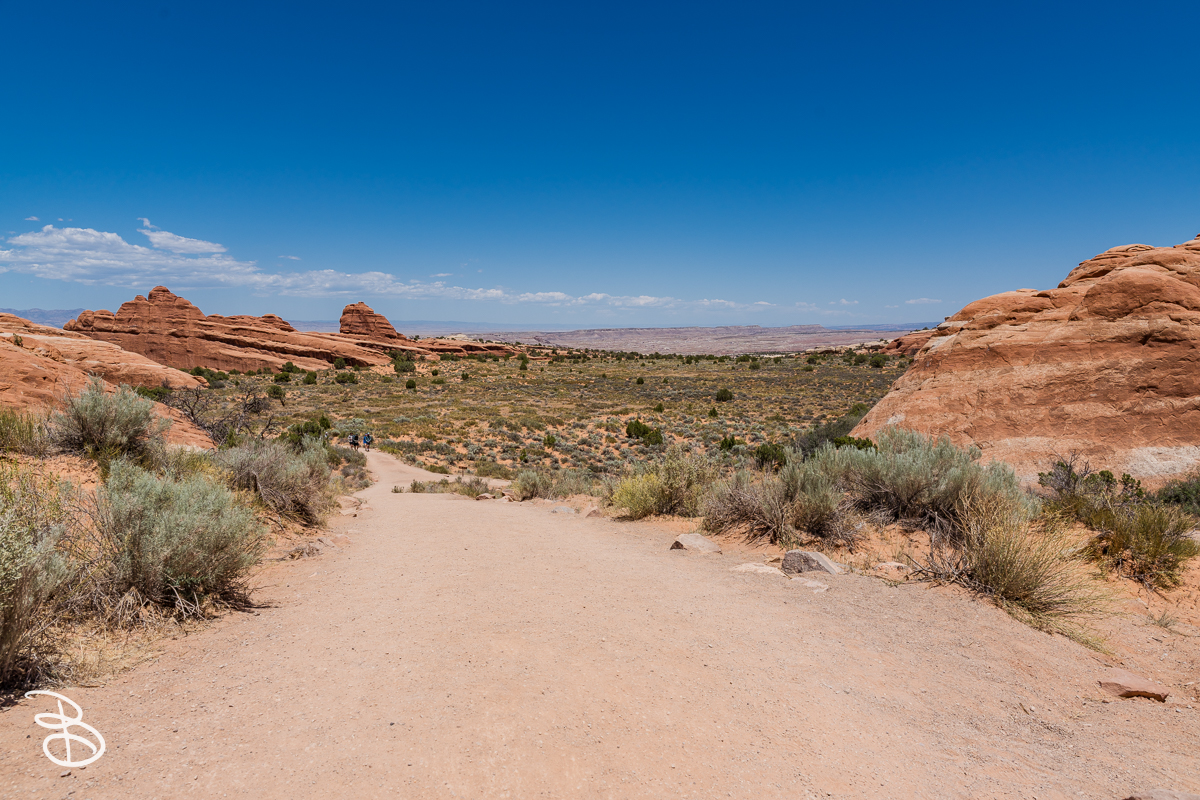
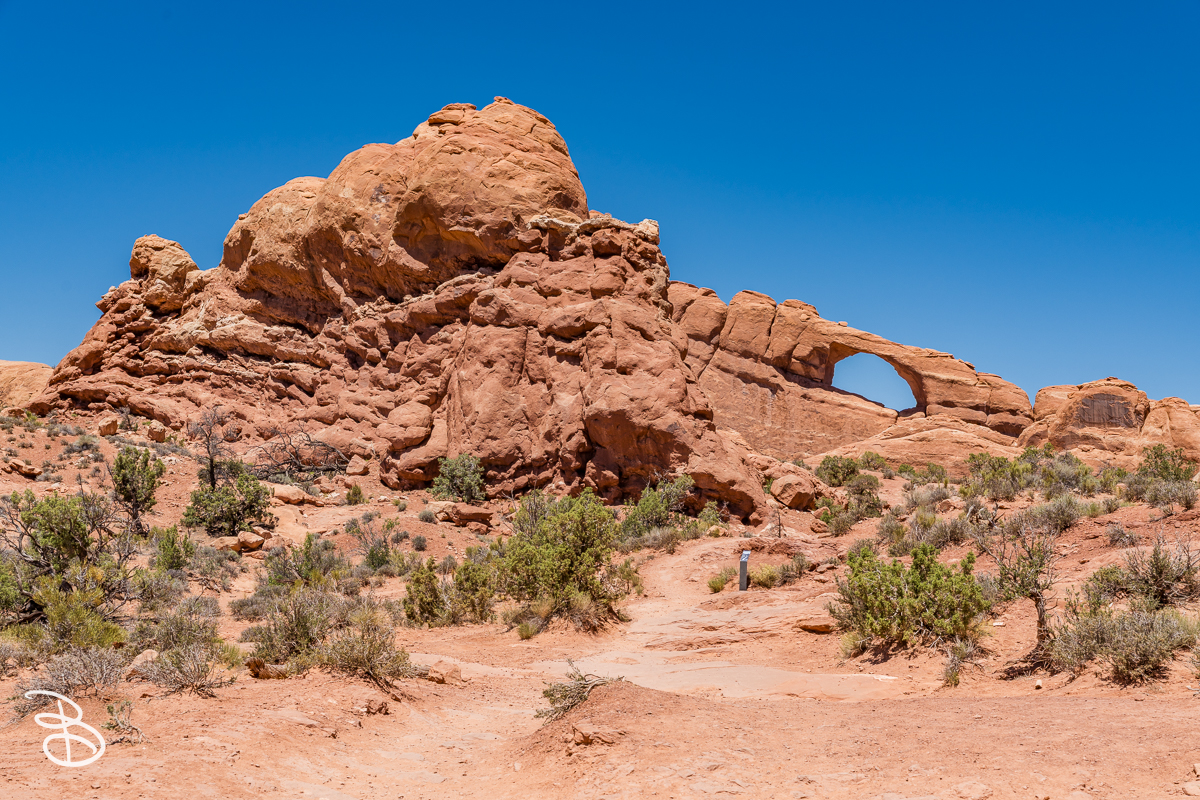
A quick and rewarding stop on the way back south. Skyline Arch sits up on a sandstone cliff above the road and is impressive in its sheer size. It is one of those formations that looks almost too perfect to be natural. Easy pullout, great views, minimal time required.
Sand Dune Arch
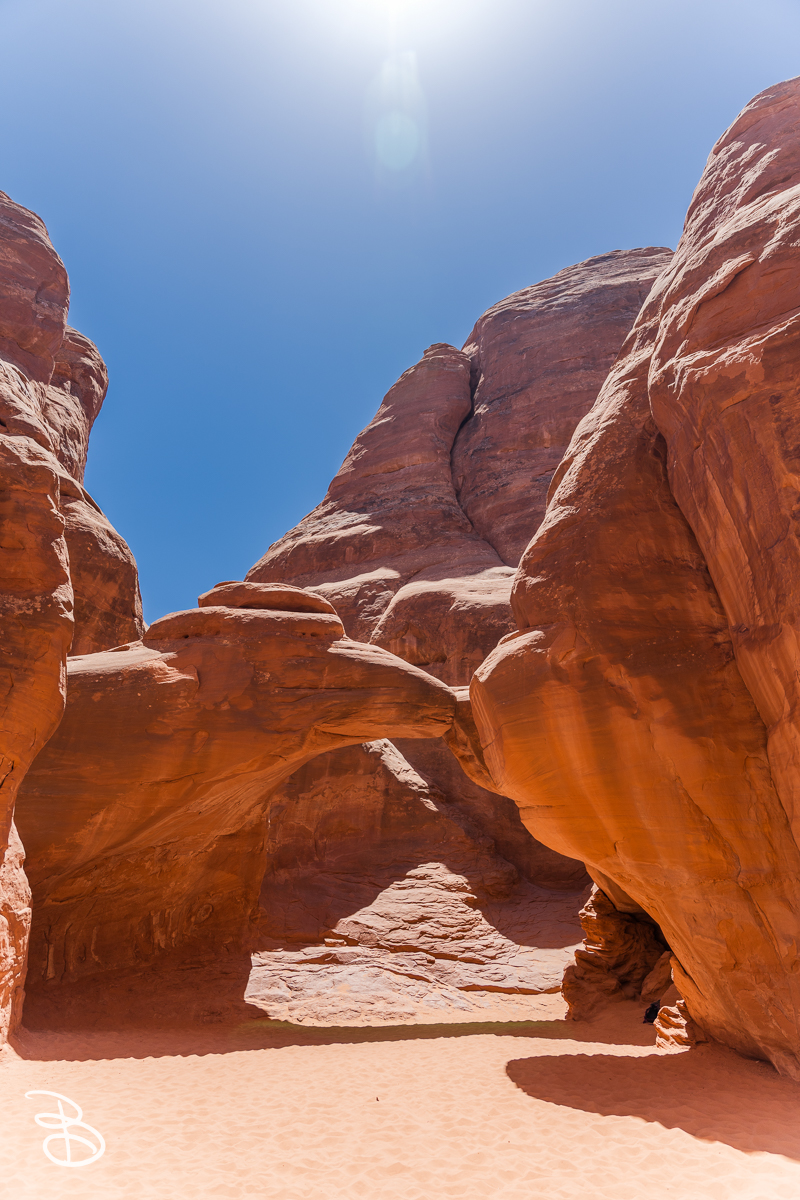
Tucked between towering fins of sandstone, Sand Dune Arch is a short walk from the parking area and offers a very different experience from the open overlooks elsewhere in the park. The arch sits low to the ground in a shaded, sandy alcove that feels almost hidden. On a hot afternoon it was one of the few spots where we actually felt some relief from the sun.
Fiery Furnace Viewpoint
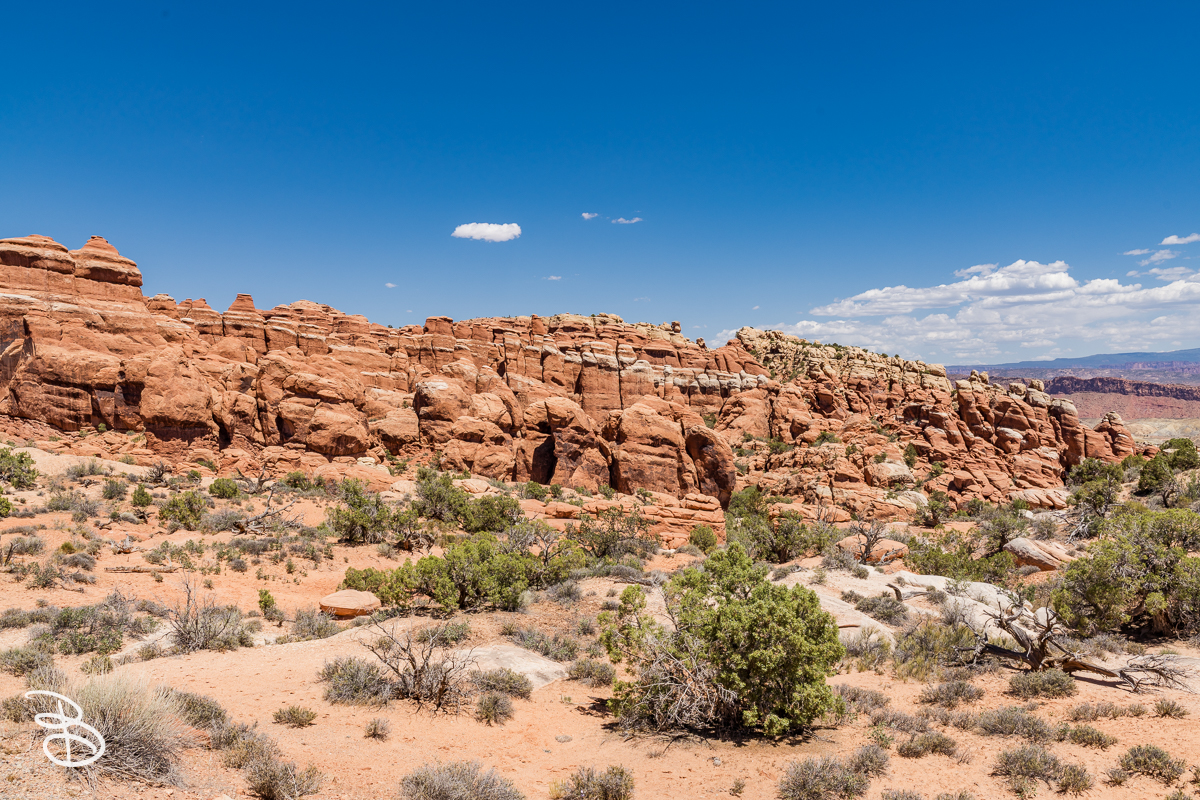
The Fiery Furnace is one of the most iconic and mysterious sections of Arches, a dense labyrinth of narrow sandstone fins and passages that can only be explored with a ranger or a permit. From the viewpoint you get a sense of just how complex and maze-like the terrain is. Even from the rim, looking down into that tangle of red rock is fascinating.
Salt Valley Overlook
A quieter and more contemplative stop that offers a wide view across the Salt Valley floor with the Fiery Furnace and surrounding fins in the background. The color and texture of the landscape here are striking, and the relative lack of crowds made it one of the more peaceful moments of the afternoon.
Lower Delicate Arch Viewpoint
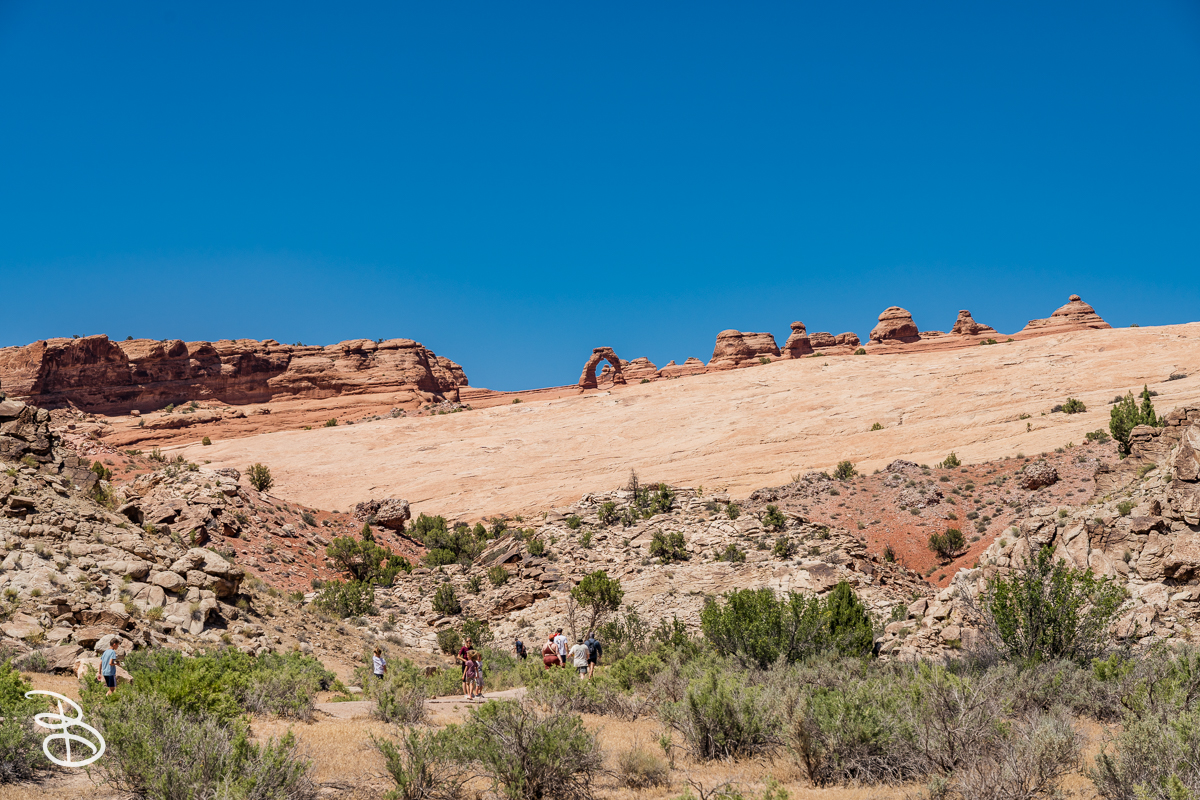
Delicate Arch is the symbol of Utah, and seeing it in person even from the lower viewpoint is a genuine moment. The arch sits up on a slickrock bowl above the canyon, and from the viewpoint below you can make out its iconic silhouette against the sky. The full hike up to stand beneath it is a 3-mile round trip that we skipped given the heat and our daughter’s enthusiasm level, but the viewpoint still delivered. Getting a sense of just how far away it is and how large it must be up close made it feel even more impressive.
Panorama Point
The name earns its keep. Panorama Point offers a sweeping, unobstructed view across a wide stretch of the park with multiple formations visible at once. It is a great stop to take a breath, look back at everything you have covered, and appreciate the full scope of the landscape.

The Windows and Double Arch
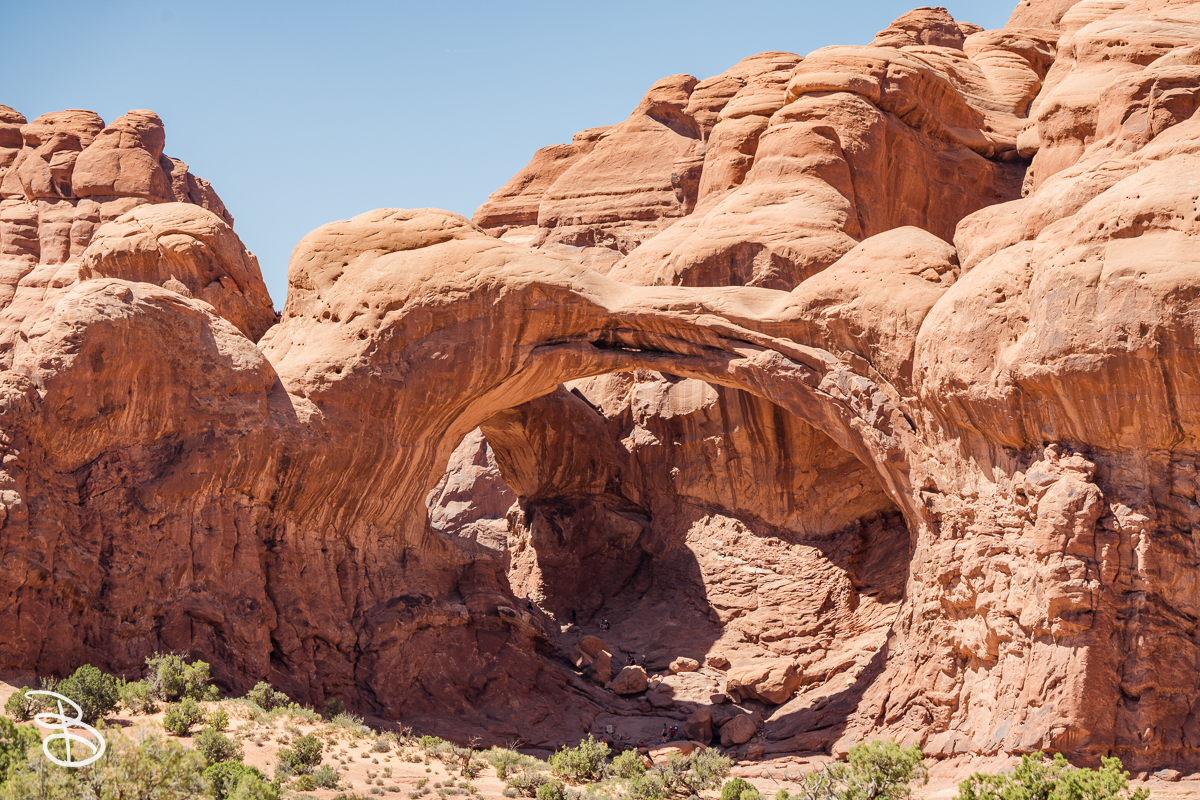
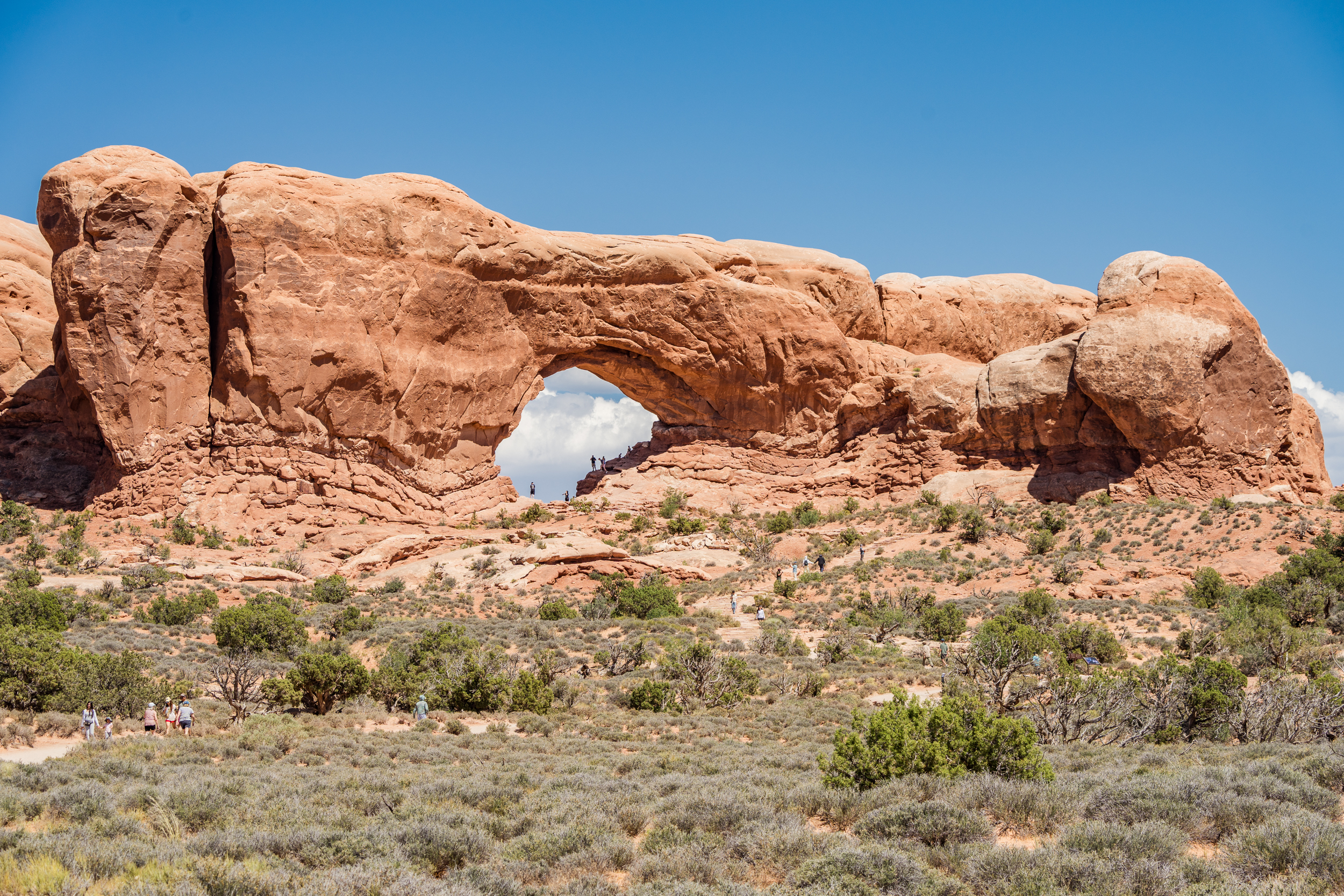
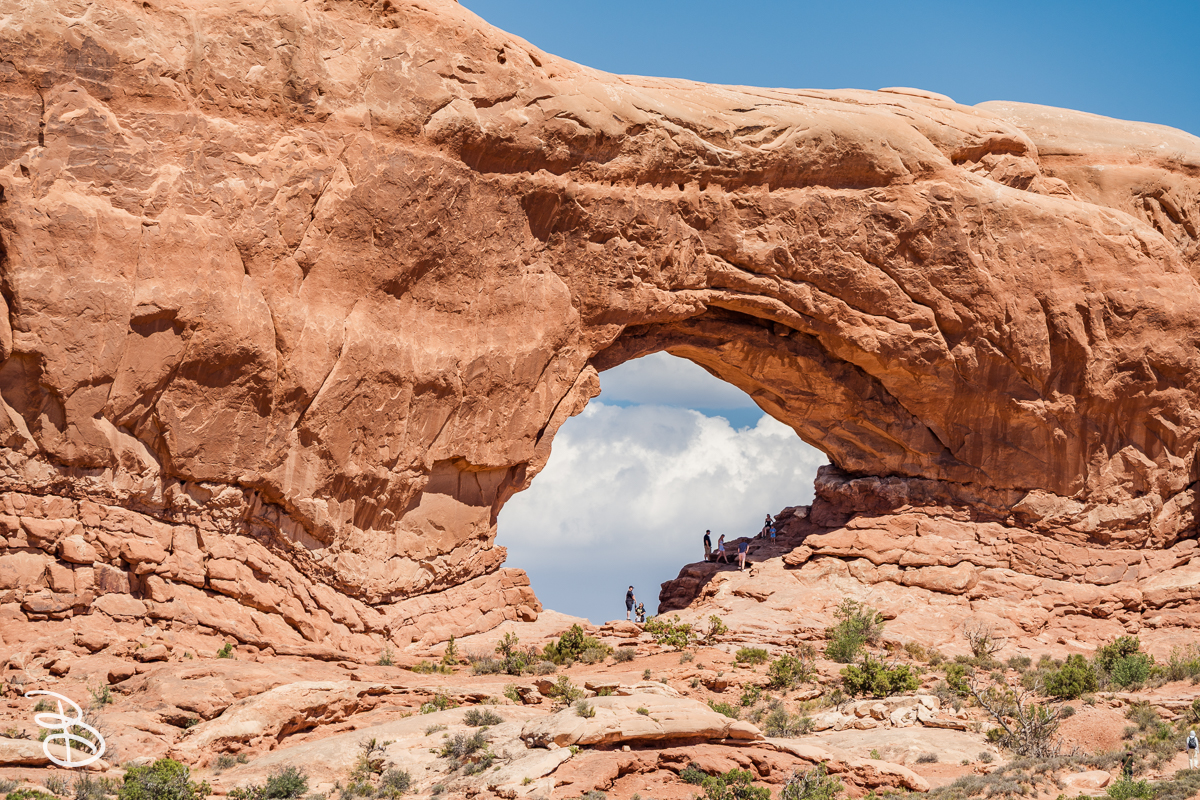
This was one of the highlights of the afternoon. The Windows section features two massive arches, North Window and South Window, sitting side by side in a way that makes them look almost architectural. Double Arch, just a short walk away, is even more dramatic up close. You can walk right up and stand beneath it, looking straight up through two openings stacked above you. That sense of scale, standing under something that enormous, is what separates Arches from just looking at photos of it.
Pothole Point
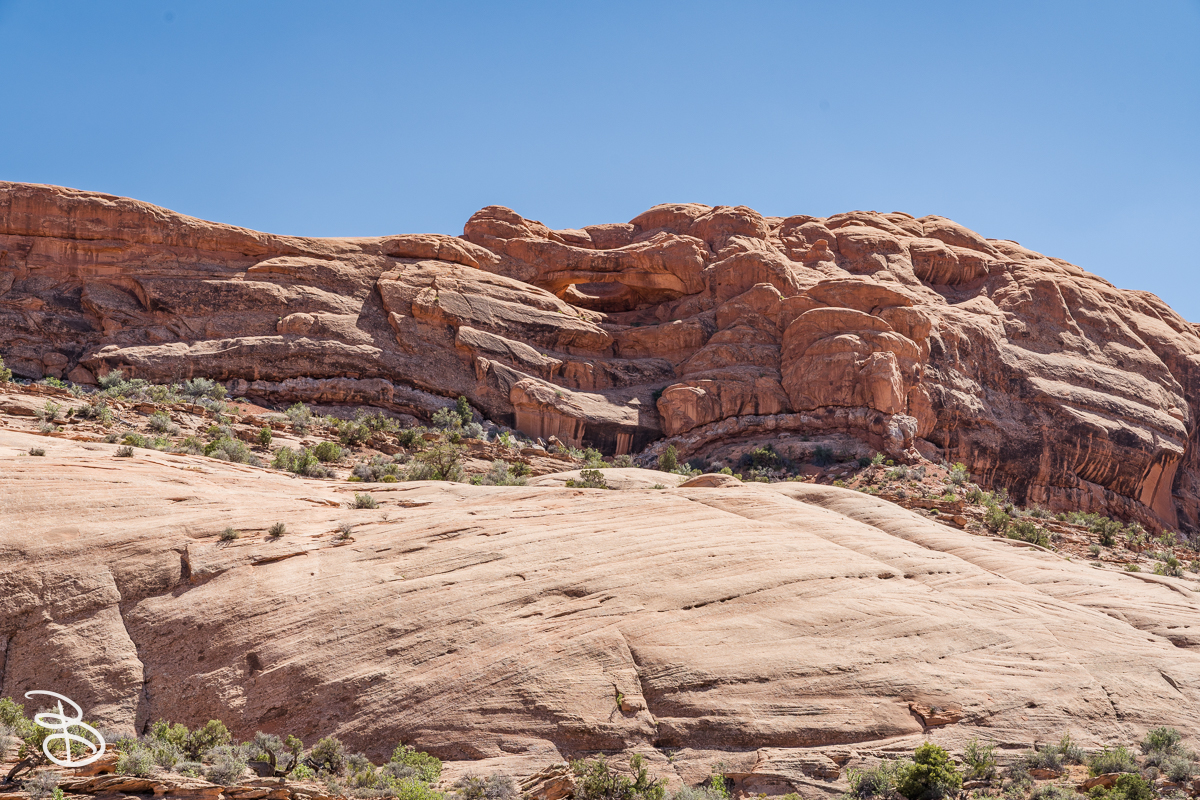
A brief but interesting stop where erosion has carved shallow bowl-shaped depressions into the flat sandstone surface. After rain these potholes fill with water and support their own tiny ecosystems. On a dry afternoon they read as an unusual and textured stretch of rock that is worth a few minutes of exploration, especially with curious kids.
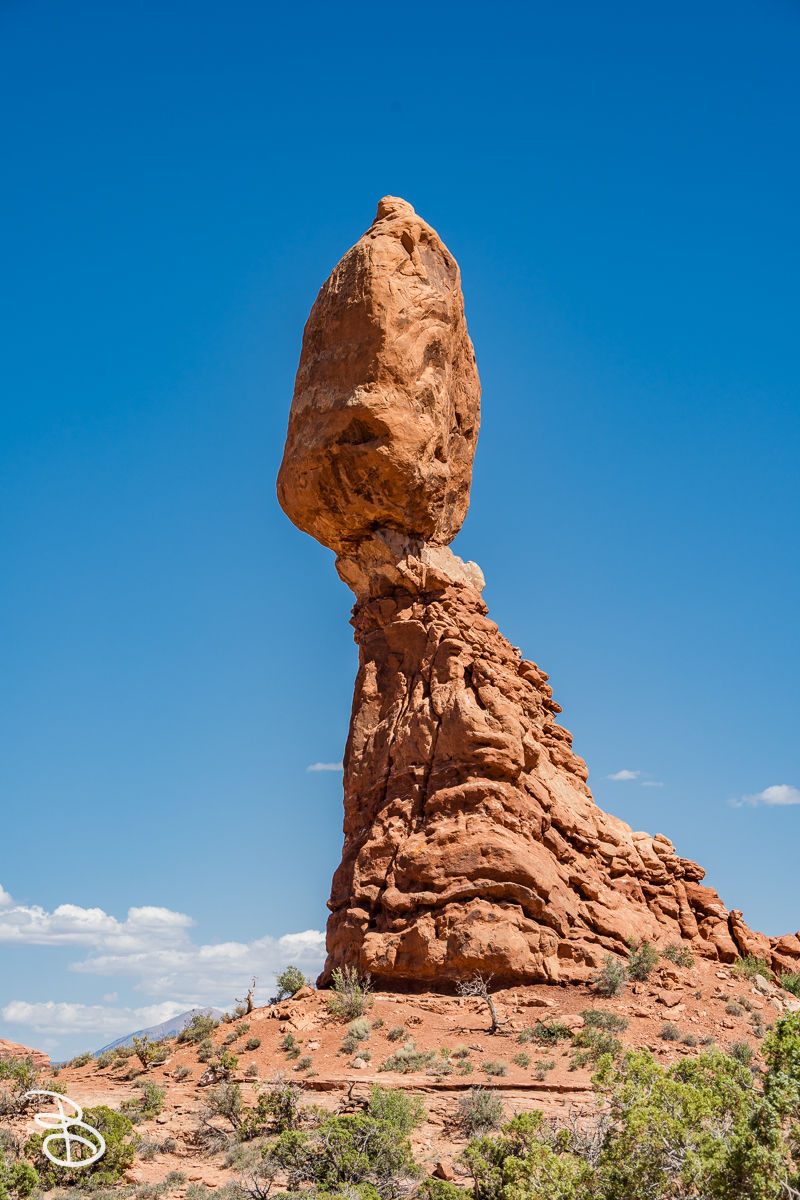
Balanced Rock
One of the most recognizable formations in the park, Balanced Rock is exactly what it sounds like: a massive boulder perched on a narrow pedestal of softer rock, looking like it could tip over at any moment. It has been standing this way for thousands of years and makes for one of the more surreal photo opportunities in the park. There is a short loop trail around the base that is easy enough for kids of any age.
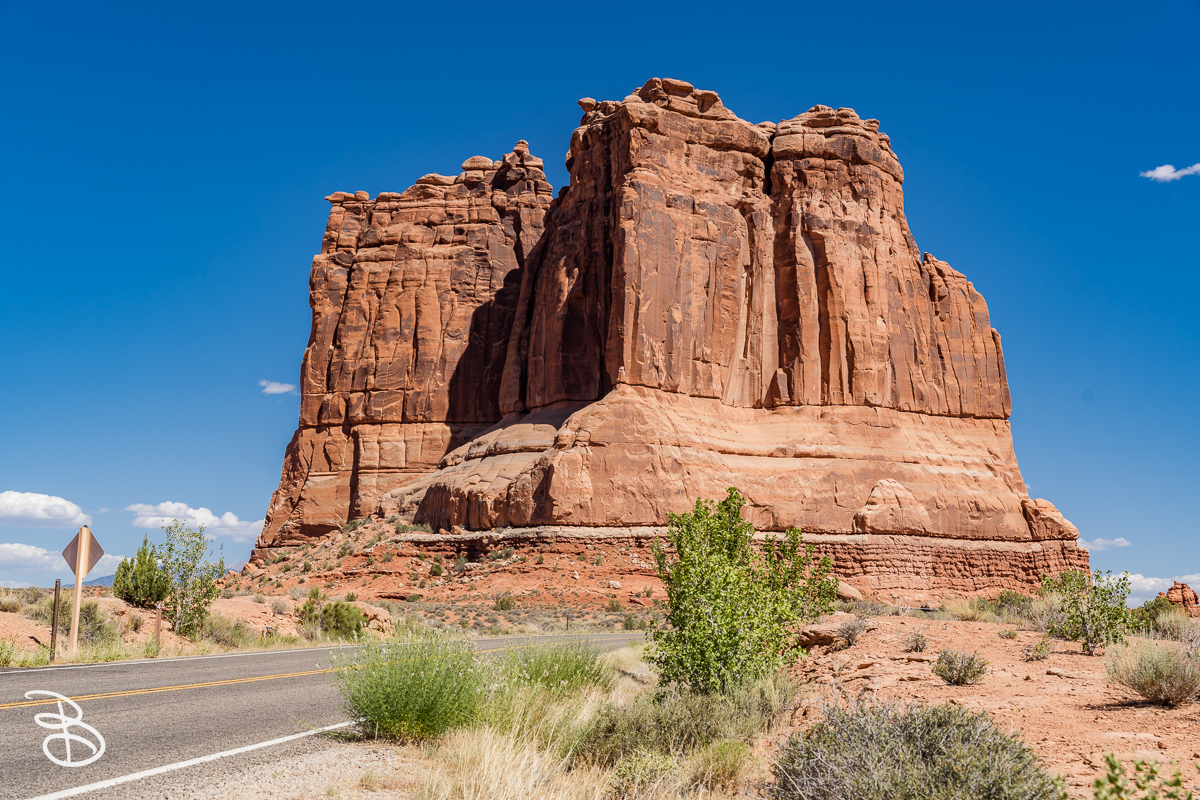
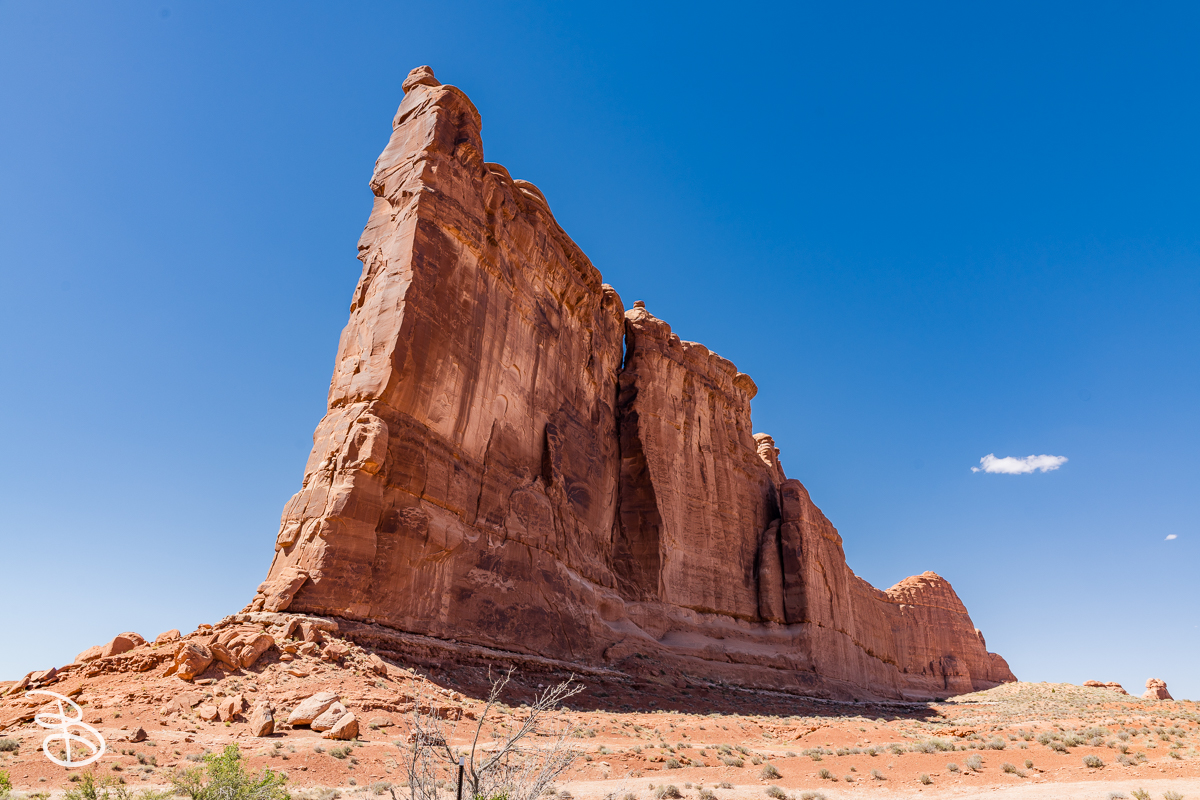
Courthouse Towers
Our last stop before heading back toward the entrance and eventually Moab. The Courthouse Towers section features a collection of massive sandstone monoliths that rise dramatically from the valley floor, including the Tower of Babel and the Organ. It is a fittingly grand way to close out the scenic drive, with formations that feel imposing and ancient in a way that puts the whole afternoon in perspective.
Quick Impressions
Arches is undeniably impressive, and the sheer variety of formations along the scenic drive keeps things interesting. That said, if you have spent time at Red Rocks or Valley of Fire in Nevada, some of the scenery will feel familiar rather than revelatory. The exceptions were the largest structures and arches, particularly Double Arch and the Windows, where the scale of standing beneath them in person delivers something no photo can replicate.
Wildlife was minimal during our afternoon visit. A couple of lizards skittering between rocks and cooling off in the shade were the only animals we spotted. The plant life was more interesting, with cactus appearing throughout the landscape alongside sage and juniper trees that give the park a distinctly high desert character. Wildlife seekers will want to temper their expectations here.
Crowded but manageable. We found parking at every stop we visited, which felt like a win after our experience at Bryce Canyon. A few stops had no other visitors when we arrived, which made for some welcome breathing room. The busier areas like the Windows section drew more people, but never to the point where it felt overwhelming.
The pullouts and overlooks throughout the park are plentiful and easy to navigate, making much of Arches accessible without any serious hiking. Most of the backcountry trails involve uneven terrain and are not designed for wheelchair users, but the main stops along the scenic drive are approachable for a wide range of visitors. The trail at Devil’s Garden surprised us with how solid and wide it was, manageable enough that we even saw someone navigating it in a wheelchair without much difficulty.
Arches is doable with kids, but the afternoon heat is a real factor. We kept our daughter covered with a cap, sunscreen, and a cooling towel, and the only shade available was from the rock formations themselves. Families with younger or more tired children will want to plan around the heat and keep expectations realistic about how much ground they can cover. That said, the easy pullouts and short walks to many of the formations make it workable even on a tough day.
Closing Thoughts
Arches National Park is a worthy stop on any Utah road trip, especially if you are already making your way through the national park corridor. The variety of formations along the scenic drive is genuinely impressive, and stops like Double Arch and the Windows deliver that sense of awe that makes the detour worthwhile. If you are coming in without prior red rock experience, it will likely blow you away. If you are arriving after Zion and Bryce Canyon with a tired kid in the back seat, it still holds its own.
We wrapped up the afternoon and made our way into Moab for the night, grateful for air conditioning and a horizontal surface. Sometimes the best thing you can do for your family on a road trip is know when to call it a day.
Pro tip: Visit Arches as early in the morning as possible, especially in summer. The afternoon heat is intense and the parking lots at popular stops fill up fast. The park usually requires a timed entry reservation during peak season, so check the National Park Service website before you go. BUT for the 2026 season, no timed entry reservation is required. Again, check the National Park Service website before you go for the latest updates.
